


After spending time in candid workshops with nearly 100 CEOs and senior operators, I came away with a realization that isn’t being discussed openly enough: leaders know AI will reshape their businesses, but many are still unsure how to lead through what comes next.
That uncertainty isn’t a weakness but pretending it that doesn’t exist…is.
In my latest Forbes column, I explore the questions CEOs are wrestling with behind closed doors, from the limits of today’s efficiency-first thinking to the AI slop-induced “AI tax” already showing up inside organizations. More importantly, I look at what it will take to move AI from a collection of tools and experiments to a true leadership agenda, one built around imagination, trust, growth, and the courage to become a beginner again.
The AI Conversation CEOs are not Having Out Loud

AI is now firmly on CEO and board agendas. But many leadership teams are still asking the wrong questions. Recently, I led several workshops with roughly 100 CEOs and Chief Operators at a leadership conference in Arizona.
The topic was AI. But the real conversation was leadership.
These were honest conversations with operators who are under daily pressure to grow revenue, protect margins, improve customer experience, support stretched teams, open better organizations, retain talent and make faster decisions in a more complex operating environment.
What became clear is that CEOs feel the pressure. Their boards are asking about it. Their teams are experimenting with it. Vendors are pitching it. Competitors are talking about it. The headlines only make everything more confusing.
But beneath the urgency is something much more revealing, but often kept quiet.
Many CEOs know AI is going to change their business, but they do not yet know how to lead through it. The recent CEO departures at Coca-Cola and Walmart signaled as much.
That is not something most CEOs are going to say out loud in a boardroom or at an all-hands meeting (unless they’re already on their way out). CEOs are expected to project clarity. They are expected to have conviction. They are expected to know where the business is going.
But in a trusted setting, the more honest version surfaced: “I know this matters. I know we need to move. But I’m not sure where to start, and I’m not sure my organization is ready.”
Executives don’t know what they don’t know. This was by far the most interesting part of each workshop. Leaders would share that they are the CEO because they know what to do. But they admitted that they don’t what to do right now. That scares them. And they’re not sharing that honesty with their teams. Anyone who appears as an AI expert is heard, regardless of their credentials or caliber of ideas.
Companies that survive and thrive will be the ones whose leaders are willing to rethink how the enterprise creates value.
Most CEOs Are Still Thinking Too Small

Any time AI came up, most leaders immediately went to the obvious places: customer service chatbots, productivity tools, automation, reporting, marketing content and operational efficiency.
Those are all valid starting points. They are also too narrow. The dominant mindset still is: “Where can we bolt AI onto the business?” Much less common is the more important question: “How should the business work differently now that AI exists?”
If AI is treated as a bolt-on, it will mostly produce incremental gains. Faster emails. Better summaries. More efficient customer service. Some cost savings. Some productivity improvements.
But if AI is treated as a catalyst, it forces a much deeper conversation about work, workflows, operating models, decision rights, talent, guest experience and growth.
Most companies are trying to use AI to optimize existing workflows. They aiming to reduce costs. But very few are asking whether those workflows should exist in their current form or whether there are new outcomes to be achieved not possible before AI.
Not having these conversations lead to missed opportunities.
The more advanced leaders in the room were already beginning to see AI differently. They were talking about AI not only as an efficiency lever, but as a growth catalyst. They named opportunities in customer experience, revenue generation, service models, locale, labor planning, team experience, training and better decision-making.
That is where the conversation needs to go. Not just, “How do we save time or money as we optimize yesterday?”
But, “What can we now do that we could not do before?”
The Real Bottleneck Is Imagination

IT came up a lot in the workshops, often as a roadblock as IT leaders were said to prioritize protecting their positions instead of getting closer to the business. Data came up constantly. Governance, risk, privacy and security were top of mind.
These are real issues. Most companies have fragmented systems, disconnected data, unclear ownership and legitimate concerns around how AI tools are being used. Those problems cannot be ignored.
But the deeper bottleneck is not technical. It is imaginative. And imagination is at war against those pushing agendas that make AI the new status quo.
Most leadership teams have not yet developed a shared picture of what AI could make possible across the organization. In the recent Microsoft Work Trends Index report, research found that only 1 in 4 AI users (26%) say their leadership is clearly and consistently aligned on AI. As a result, the conversation defaults to tools. The company starts with use cases before it has a point of view.
That is backwards. A leadership team should start with asking:
“Where is our business constrained by old assumptions?”
“Where are we too slow?”
“Where are we too manual?”
“Where are we overly dependent on tribal knowledge?”
“Where are decisions being made with incomplete information?”
“Where are teams spending time on work that does not create differentiated value?”
‘Where are guests experiencing friction?”
“Where are operators not getting the support they need?”
Those questions open up a different kind of AI conversation. They move AI from a technology agenda to a business agenda.
How imagination takes shape is also tied to embracing a beginner’s mind.
CEOs are Learning That Fluency Cannot be Delegated

One of the clearest themes from the workshops was that AI fluency is becoming a leadership priority.
That does not mean every CEO needs to become technical. It does mean CEOs and senior teams need enough understanding to ask better questions, challenge shallow ideas, recognize real opportunities and make informed decisions about risk.
AI cannot live only with IT. It cannot live only with digital. It cannot live only with innovation teams or a few enthusiastic power users. Of course, those functions matter. But AI strategy has to be led by the business.
The risk is that, in the absence of senior-level fluency, whoever sounds most confident becomes the de facto AI expert. That could be a vendor. It could be a consultant. It could be an internal enthusiast. It could be someone with technical expertise but limited understanding of the company’s operating model.
Confidence is not the same as judgment. CEOs and leadership teams do not need to know everything about AI, but they do need to know enough to lead.
The ‘AI Tax’ Is Already Showing Up
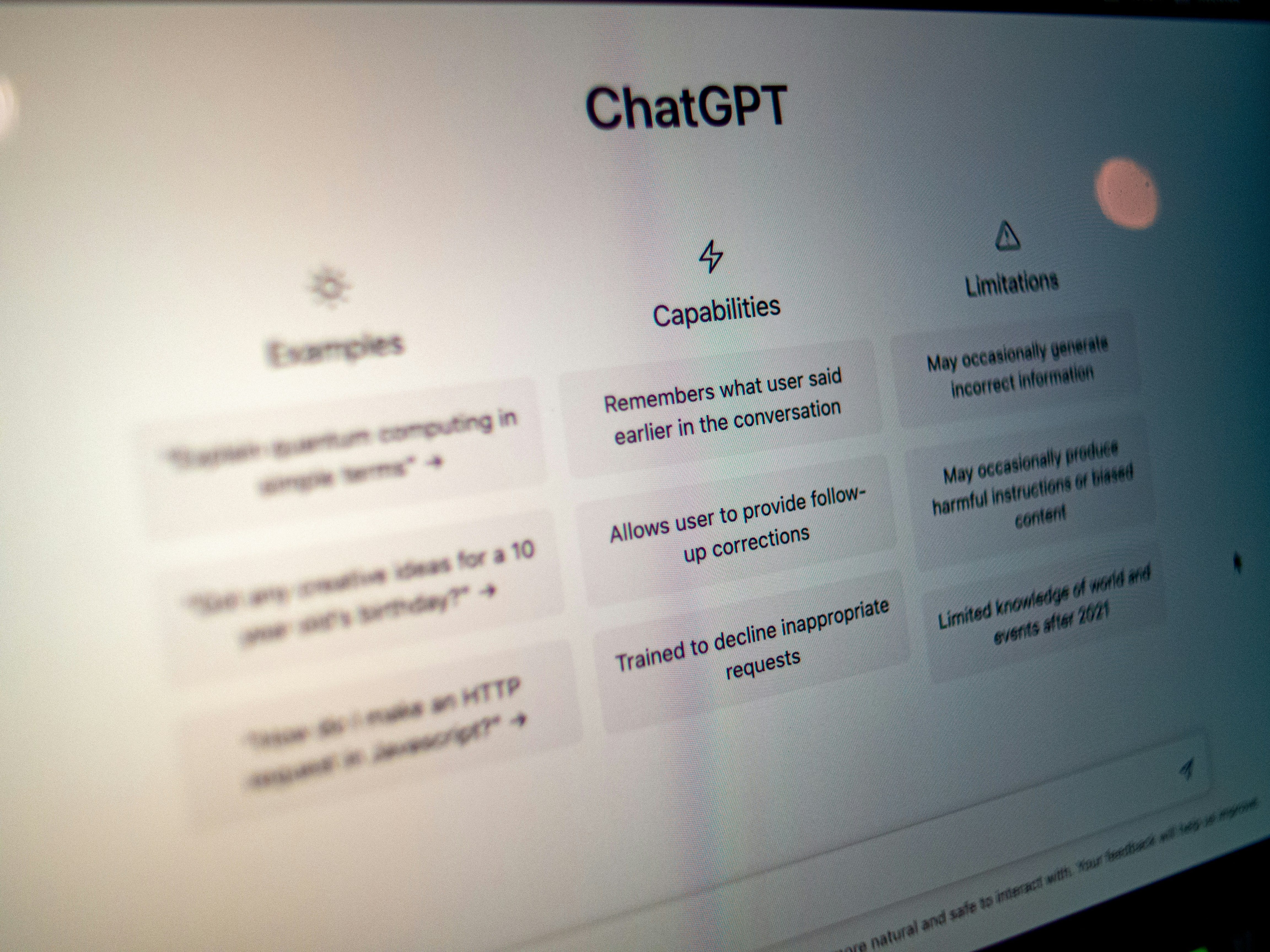
There was another theme in the room that deserves more attention.
In many companies, employees are already using AI to improve personal productivity. That sounds positive, and in many cases it is. But the results are uneven.
A lot of organizations are now seeing more volume, but not always more value. More content, but not always better thinking. More drafts, more summaries, more decks, more emails, but also more generic work, more rework and more quality control issues.
This is the AI tax.
I read this quote in a recent article on Futurism, “I have never knowingly finished reading an email signed by a human but written by AI.”
AI generated content is turning people off.
It is the hidden cost of unmanaged adoption. It shows up as shallow analysis, off-brand communication, hallucinated facts, duplicated effort, and the quiet frustration of managers who now have to clean up AI-assisted work that was never thoughtfully reviewed.
But the answer is not to ban experimentation. That would be a mistake. The answer is to raise the floor, set standards, set norms at a higher-bar.
Organizations need to teach people not only how to use AI, but how to use it well and what good vs. great looks like. And on that note, leaders need to call out what slop looks like and why it’s not acceptable. They need to demonstrate how to prompt with context., how to pressure-test output, hw to protect sensitive data, how to preserve brand and personal voice, and how to know when human judgment matters most.
AI fluency is not just about access to tools. It is about quality of thinking and output.
Fear Is In The Room

Every CEO understands there is fear around AI and jobs.
Employees are wondering what this means for their roles, their teams, their relevance and their future. Some are excited. Some are anxious. Many are both.
Leaders feel this tension. They know they need to move. They also know that if AI is framed only as a cost-cutting exercise, the organization will resist it.
That is why change management came up repeatedly.
But “change management” may be too soft or “out of date” a phrase for what is required. This is not simply about communications, training, or adoption plans. This is about trust, vision, and leadership.
I don’t know anyone who enjoys “change” or “management.”
Employees need to understand the company’s intent, vision, direction…a future motivating state. And they need to believe they play a role in building that future.
Is AI here to eliminate people? To empower them? To change what great performance looks like? To create capacity for growth? To improve the customer’s experience? To make the business more resilient?
If leaders do not define the narrative, employees will create their own.
And in the absence of trust, the default narrative will be fear.
The Best Leaders Are Willing To Become Beginners Again
One of the most striking moments in the workshops was hearing several CEOs arrive at the same conclusion on their own: they need to approach AI with a beginner’s mind. Remember why you started.
That is easy to say and hard to do.
CEOs are rewarded for experience, pattern recognition, conviction, and decisiveness. They are usually in the room because they have seen a lot, solved a lot, and developed good instincts over time.
AI challenges that posture.
It is moving too quickly for any leader to pretend they have it all figured out. The old patterns still matter, but they may not be enough. In some cases, they may even get in the way.
A beginner’s mind does not mean abandoning judgment. It means being honest about where judgment needs to be rebuilt.
The leaders who navigate this well will not be the ones who perform certainty. They will be the ones who create the conditions for their organizations to learn faster than the market around them. And this mindset is where imagination comes to life.
What CEOs And Leadership Teams Should Do Next

The path forward is not to launch random pilots or chase every new tool. It is to build a leadership agenda for AI.
First, stop starting with use cases. Start with the work.
Look across the enterprise and identify where work is slow, repetitive, inconsistent, overly manual, or trapped in silos. Then ask how that work could be redesigned with AI. The goal is not to add AI to bad processes. The goal is to rethink the process.
Second, define the company’s AI ambition.
Every leadership team should be able to answer a simple question: What do we want AI to make true about our company?
Do we want to become more efficient? More predictive? More guest-obsessed? Better at supporting operators? Faster at opening restaurants? More personalized in how we serve customers? Better at growing revenue? A better place to work?
Without a clear ambition, AI becomes a collection of disconnected experiments. With a clear ambition, it becomes a strategic agenda.
Third, build executive fluency.
The CEO and leadership team need dedicated time to understand what AI can do, where it fails, what risks it creates, and how it may reshape the business. This cannot be a one-time inspiration session. It has to become part of how the senior team thinks about strategy, operations, talent, and growth.
Fourth, treat governance as an enabler.
Risk is real. Governance matters. But the purpose of governance should not be to slow the organization down. It should help people move faster with confidence.
Teams need clarity on what tools are approved, what data can be used, where human review is required, how brand standards are protected, and what behaviors are off limits.
No rules creates risk. Too many rules creates paralysis. Good governance creates trust.
Fifth, confront the data reality.
Many companies are not ready for the AI they say they want because their data is too fragmented. Guest data, labor data, transaction data, training data, operational data, marketing data, real estate data, and financial data often sit in disconnected systems.
Perfect data is not required to begin. But leadership teams need to be honest about which data domains matter most and where better integration would create the greatest leverage.
AI will not magically create enterprise intelligence from organizational fragmentation.
Sixth, redesign work before redesigning headcount.
If AI is introduced primarily as a labor reduction tool, employees will protect themselves. If it is introduced as a way to create capacity, improve work, and unlock growth, the conversation changes.
One of the most productive moments in the workshops came when I asked leaders what they would do with resources freed up by AI.
That question shifted the energy in the room.
Instead of talking only about efficiency, leaders began talking about growth. Better guest experiences. Stronger teams. New services. More support for operators. Faster innovation. Better decisions.
That is a more meaningful frame.
Freed-up capacity should not automatically become removed capacity. In the best companies, it becomes growth capacity. Reinvest efficiency gains back into the business and people.
Finally, build a culture of disciplined experimentation.
The companies best positioned for AI are not necessarily the ones with the most tools. They are the ones where people feel empowered to try new things, ask better questions, challenge old assumptions, and learn from failure.
But experimentation needs discipline. Otherwise, it becomes noise.
Leaders need to define what good AI-assisted work looks like. They need to create safe spaces for testing. They need to share what is working. They need to call out low-quality output. They need to make learning visible.
AI adoption cannot be a free-for-all. It has to become an organizational capability.
The Leadership Moment

The biggest takeaway from my time with these CEOs is that they are not behind because they lack interest. They are behind because AI requires a more honest leadership conversation than most companies are currently having.
This is not just about tools. It is not just about automation. It is not just about chatbots, productivity, or cost savings and efficiency gains.
It is about whether leaders are willing to admit that the old playbook may not be enough or even right.
For many CEOs, the hardest part of AI will be creating the space to learn before they feel ready, to ask questions they are not used to asking, and to lead through ambiguity without pretending it does not exist.
That is the conversation CEOs may not be having out loud. But it is the conversation they need to have with their leadership teams now.
Where are we thinking too small?
What do we not yet understand?
What work would we redesign if we were building the company today?
How do we turn efficiency into growth?
And what kind of leadership does this moment require from us?
The CEOs who answer those questions honestly will do more than adopt AI. They will use it to build a different kind of company.
Infinite ∞ | Mindshift | Keynote Speaker

Thank you for the article Brian and for sharing your insights. I’ve seen many of the same patterns in businesses I’ve been involved with over the past few years. AI is still often treated primarily as a technology problem rather than a business model question.
What I find particularly interesting is that experimentation has probably never been this cheap. That gives companies an opportunity not only to improve existing processes, but to start experimenting with their business models again.
I agree that much of today’s AI adoption is about raising the floor—helping lower-quality work become average or good enough. But there is another possibility: raising the ceiling of expertise or moving the walls of the business itself. That requires a very different approach because the question shifts from “Where can AI make us more efficient?” to “Where can AI enable us to create value that was previously impossible or uneconomical?”
That leaves me with a difficult strategic question: if every competitor eventually has access to essentially the same AI capabilities, what must a company uniquely become better at—not just more efficient at—for AI to create a defensible difference in its business model and genuinely different value for customers? And how would we know whether we are raising that ceiling (or shifting the walls) rather than simply raising the same floor faster than everyone else?
I really like the point that AI is forcing leaders to rethink how the business works. This is a big opportunity to step back and ask what we are actually trying to accomplish, then look at what AI may make possible with fresh eyes.
Leaders also need enough AI fluency to exercise judgment themselves, then bring in AI experts to help shape the options. From there, the underlying processes and ways of working can be redesigned. And I agree, redesign the work before rushing to redesign headcount.